
Japanese Healing Art Enhances Birthing Process
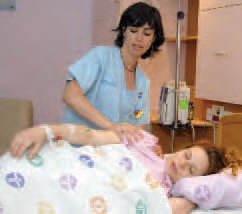
Shiatsu at Rabin Medical Center
For women in Israel, pregnancy and birth have taken on new dimensions over the last 10 years. A much wider choice of tests, first-class hospitals and birthing suites are now accessible, and Rabin Medical Center (where almost 9,000 babies are born each year) remains one of the premier choices for women.
The Schneider Women's Hospital at RMC strives to provide new and modern techniques to enhance the birthing process, and has now introduced the use of shiatsu techniques. This traditional healing art, which originated in Japan, is based on the same principles as acupuncture, except no needles are used. Instead, shiatsu uses finger and palm pressure, stretches, and massage techniques to help balance and restore the body's life energy. During the birthing process, midwives at the hospital who have been trained in this area apply shiatsu methods to reduce stress, alleviate pain and help in advancing the birthing process. The use of shiatsu during labor is fully coordinated with the medical team and is part of the conventional birth process. Prof. Marek Glazerman, Director of the Women's hospital, said: "Guided by the principle that giving birth is the most important and significant experience in a woman's life, we believe that the integration of holistic and conventional methods during the birth process will only enhance the experience and make it less stressful and more comfortable."
Rabin Medical Center has always been a trendsetter in advanced medical care and strives to provide integrated treatment options in all domains of medicine.
Related Articles
Georgian Casulties Treated
Three people wounded in the war in Georgia were flown to Israel and brought to Rabin Medical Center for treatment
Rabin Medical Center Saves Breast Cancer Patients with New Mammography Techniques
A researcher at Zebra Medical Vision has created a new mammography algorithm that uses machine and deep learning to diagnose breast cancer (BC), with results that the company claims are superior to those achieved using current methods.
iPad Catheterization Application Used for the First Time at Rabin Medical Center
A new advanced technology has been developed for the first time worldwide, at Rabin Medical Center's Invasive Cardiology Institute, where all pertinent information collected during the cardiac catheterization procedure is sent directly to an iPad.