
Russian Radiologists Rendezvous at Rabin
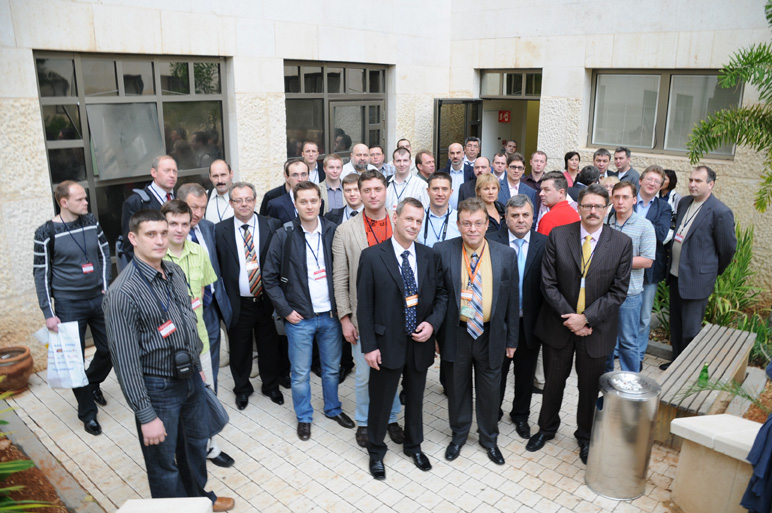
As one of the global leaders in the field of invasive endovascular procedures, Dr. Alexander Belenky, head of the Interventional Radiology Unit at Israel's Rabin Medical Center, recently presided over a conference for more than 100 radiologists from over 70 vascular centers in Russia. This event also included an international forum of world renowned radiologists from the USA and Turkey.
The week long gathering dealt with all the modern aspects of neuroradiology and endovascular radiology, including the latest treatments available in both fields. In addition, master classes and training sessions for real life procedures were carried out by Dr. Belenky and his colleagues from RMC and other Israeli hospitals.
The Interventional Radiology Unit at Rabin Medical Center is a state of the art facility that specializes in innovative minimally invasive procedures as alternatives to traditional surgery. These include angioplasty and vascular stenting, which treat conditions that result when arteries throughout the body become narrowed or blocked and there is a need to improve blood flow. Dr. Belenky, an eminent expert in this field and a specialist in the development of new minimally invasive techniques, regularly carries out such life saving procedures on both Israelis and patients from abroad.
Dr. Belenky remarked about the conference, "It is an honor to host such a large group of radiologists from so many vascular centers in Russia where more and more minimally invasive treatments are being carried out. This is a fast growing medical field which performs non-surgical, life saving procedures."
Related Articles
The Future is Here, for a Better Tomorrow
The Second International Advisory Board Meeting and Symposium of the Raphael Recanati Genetic Institute, chaired by Prof. Moshe Garty was recently held at Rabin Medical Center.
Rabin Medical Center Saves Breast Cancer Patients with New Mammography Techniques
A researcher at Zebra Medical Vision has created a new mammography algorithm that uses machine and deep learning to diagnose breast cancer (BC), with results that the company claims are superior to those achieved using current methods.
It Only Gets Better From Here: GE Healthcare Arrives at Rabin
Astrategic collaboration was signed at the end of the 2005
calendar year between Clalit Health Services and GE
Healthcare (GEHC).